Most membership sites are built to serve as many people as possible. Ali Wheeler built hers to serve five.
That is not a typo, and it is not a soft launch. Five is the cap. When the fifth business signs up for Partnered Performance Society, the door closes and the next round goes to a waitlist. Ali runs Society State, a boutique advertising agency in Melbourne, Australia, and the membership she built on Paid Memberships Pro is not a course, a video library, or a content archive. What members are buying is a standing claim on her attention.
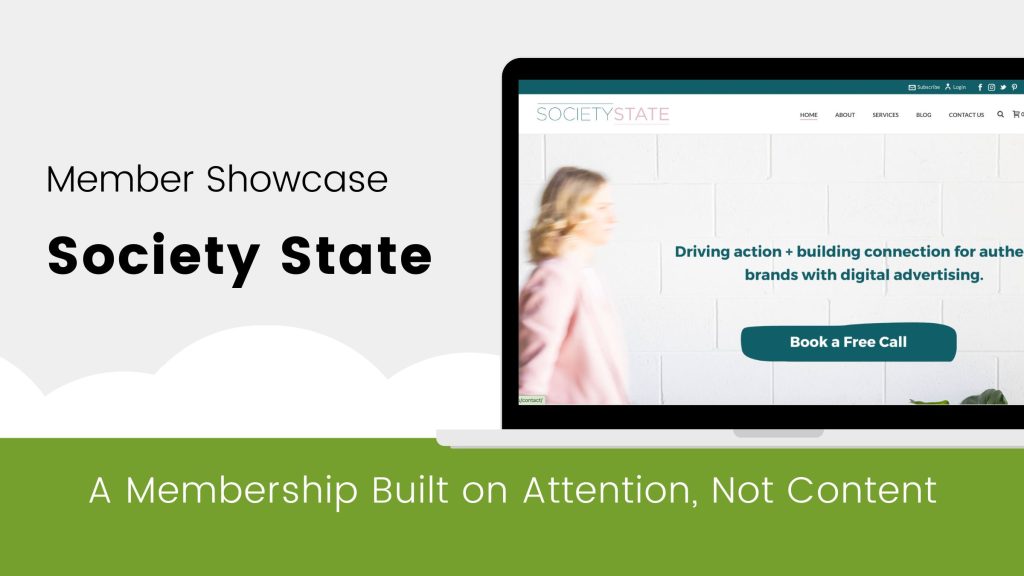
It is a different shape from most of the membership businesses we write about, and it worked. In the time she’s been on PMPro, Ali added a second tier, ran two intakes, filled her cap, and grew her revenue by $12,802 AUD.
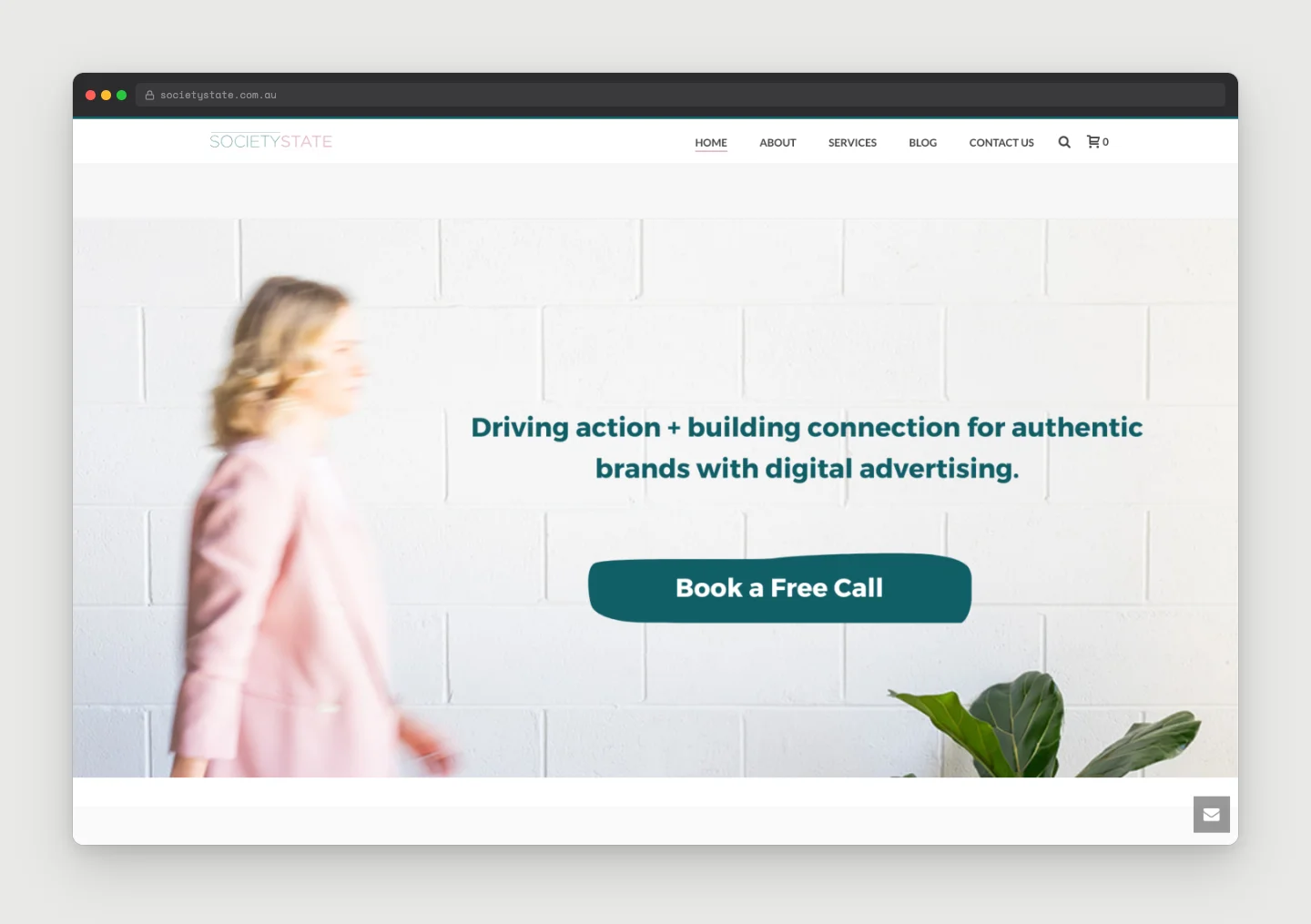
From In House Marketer to Boutique Agency
Ali has been in marketing for eighteen years. She started in house at Natio, at Territory Insurance Office, and at Sole Motive, and over the last eight of those years she narrowed in on paid digital advertising: Meta, Google, Pinterest, LinkedIn.
In 2017 she left to start Society State. The reason she gives is not the one you usually hear.

I started my business 9 years ago after reaching a point in my career where I knew my skills, knowledge, and expertise could have a DEEPER impact working with a variety of authentic and unique brands.
—Alison Wheeler, Founder, Society State
Nine years later, Society State is a small team with a deliberately short client list. The agency describes its approach as “no fuss,” which in practice means honest advice about what is working, delivered without the layer of performance that agency relationships often collect. The company name is the thesis: Ali’s job is to help a brand build its own Society State, which is her word for community.
The work now splits four ways. Digital advertising management, training, coaching, and the membership.
The Ceiling on One to One Work
Anyone who sells their own expertise eventually runs into the same wall. There are only so many hours, and the good clients want more of them.
Ali did not want the business to grow into a large agency with account managers between her and the work, but she also did not want to turn away smaller brands who needed help and could not carry an agency retainer. Asked what she was trying to solve, she described a membership before she had one:
Delivering group membership style content/ serving a larger group of clients and being able to still have a meaningful impact on their business.
—Alison Wheeler
Her requirements were practical rather than aspirational:
- Work with her existing WordPress website
- Take recurring payments
- Control who could see what
- Be something she could set up herself
What Partnered Performance Society Actually Is
Partnered Performance Society is a done-with-you Meta Ads program for brands spending between $1,000 and $5,000 a month on advertising. It costs $700 AUD per month including GST, plus a $25 sign up fee, with a ninety day minimum and month to month billing after that.
The membership is capped at five businesses.
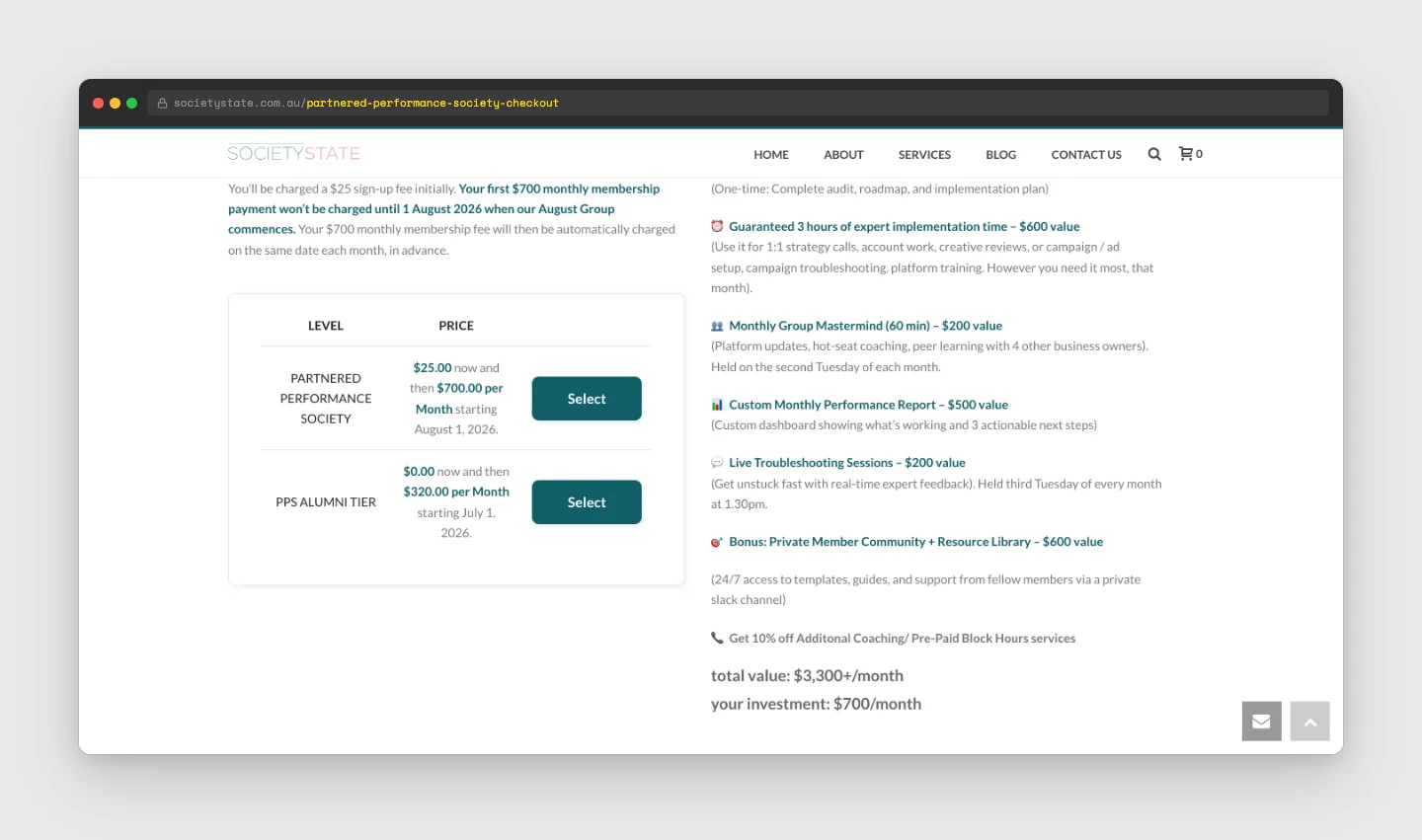
What members get is mostly Ali. Three guaranteed hours of her implementation time every month, which they can spend on one to one sessions, work inside their ad account, creative reviews, troubleshooting, or platform training. Up to one unused hour rolls over. On top of that there is a monthly group mastermind call, a live troubleshooting session, a private Slack channel where she answers within 48 business hours, and a resource library of templates and guides.
There is also a promise attached. Members who show up to the calls, use at least 80% of their one to one hours, and act on the recommendations, but who do not see measurable improvement in the metrics that matter, get their fourth month free.
The cap is what makes the rest of it possible. Three hours each for five members is fifteen hours a month, which is a real number Ali can protect. Open the cap and the promise stops being credible.
Why Ali Chose Paid Memberships Pro
Ali found PMPro the way most people find a plugin. She searched for it.
What made her choose it was narrower than you might expect, and it came down to a billing detail:
The ability to offer ongoing recurring subscriptions and a sign up fee.
—Alison Wheeler
That combination is the entire commercial structure of Partnered Performance Society. A $25 sign up fee at checkout, then $700 a month charged in advance on the same calendar date. PMPro handles both in a single checkout, running on Stripe, with recurring billing taking over from there.
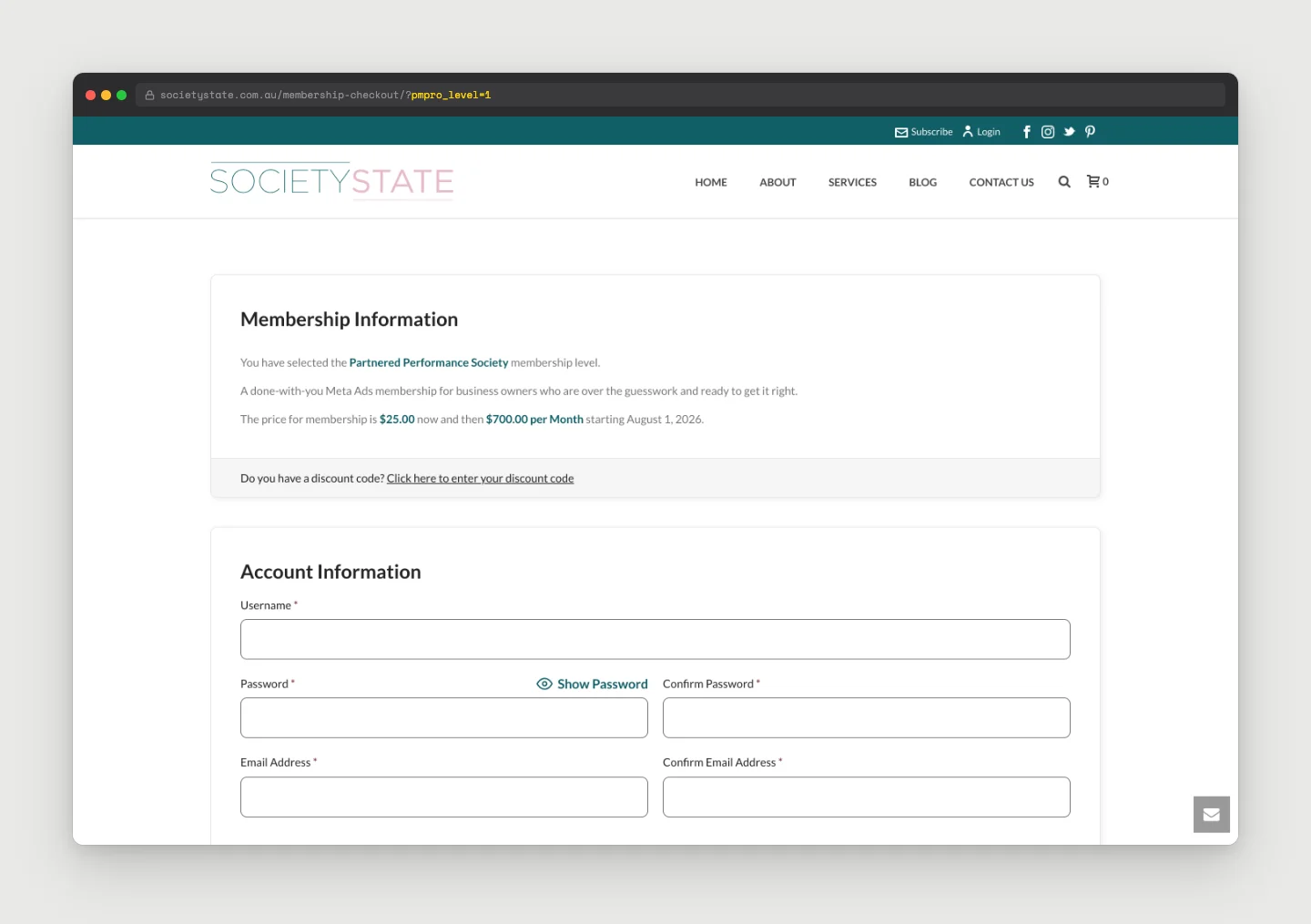
Her website was already WordPress, inherited from an earlier blog, so PMPro slotted into something she already knew how to operate. The build was hers to do, which was the point:
Fairly straightforward. It helps I knew the backend of WordPress comfortably, but the main set up was easy – the tweaks I’ve made since then I’ve been able to manage with the help of PMPro support team
—Alison Wheeler, on the setup
What Changed After the Switch
Ali stood the membership up on PMPro in March and April of this year, choosing it over another subscription platform she had been weighing. What followed is unusually easy to measure, because it all happened in a single stretch of months.
She ran an intake campaign and filled seats. She added a second tier, the PPS Alumni Tier, at $320 a month for members who finish the program and want to stay close. She ran another intake in July, and that one took her to her cap.

This year alone, since implementing PMPro in March/ April instead of another subscription software, and running a campaign to intake new members I’ve been able to successfully run my membership, adding an additional membership tier – all while running another intake again in July which has seen my business revenue increase by $12,802 AUD and hit my membership cap for my current membership
—Alison Wheeler
The revenue figure is the headline, but the cap is the more interesting number.
A membership that hits its ceiling is a membership with a waitlist, and a waitlist changes how the next intake goes. Ali runs Partnered Performance Society in cohorts. When a round fills, the next one opens to the waitlist first, with early access before general doors open. That is a launch mechanic most membership owners have to manufacture. Ali gets it as a side effect of the constraint she designed in from the start.
The other result she reports is one step further out from her own business. One Partnered Performance Society member, a hair salon, saw bookings rise 113% in their second month in the program.
With five members, Ali can tell you what happened to each of them by name.
Where Ali Hit Friction
It has not been frictionless, and Ali is honest about that.
The clearest example: a member asked to update their billing details, and the path to do it was not obvious. Ali went looking, found a code snippet, and sorted it out herself.
That is a fair description of how running a membership on WordPress actually goes. Most of it works out of the box, some of it needs a snippet, and the difference between those two categories is not always predictable in advance. What matters is whether help is available when you land in the second category.
Customer support has been great. I’ve submitted a couple of tickets and found the support really helpful and clear, even when I was unsure.
—Alison Wheeler
What Is Next for Society State
Ali’s five seat cap is not the destination. It is the version of the business she can run right now, and “right now” includes being the primary carer for small kids, which she names as the hardest part of running the company. In five years, Ali would love to offer more memberships at a lower ticket offering to support more business owners.
That is the natural arc for a service business that has proven the model at small scale, and the Alumni Tier is the first move in that direction. The high-touch tier stays capped, because the cap is what makes it good. Underneath it go the lighter offers that reach the businesses who cannot spend $700 a month but still need somewhere to start.
If you sell your expertise by the hour and you have assumed a membership was only for people with a video library to gate, Ali’s build is worth a look. She is charging for the same thing she always charged for, which is her time and judgment. PMPro just handles who has access to it, and what they pay each month to keep it.
Related Reading